October 12, 2026
Use Process Tempo Jupiter to continuously analyze purchasing patterns, bring emerging risks to the right stakeholders, and coordinate action before small purchases become larger problems.
Your purchasing policy has not changed. Your purchasing behavior has.
A supplier that once received an occasional order now serves several locations. A low-cost software subscription spreads across departments. Repeated emergency purchases become a routine buying channel.
Each transaction may pass the existing checks. The growing pattern may deserve attention long before the next scheduled spend review.
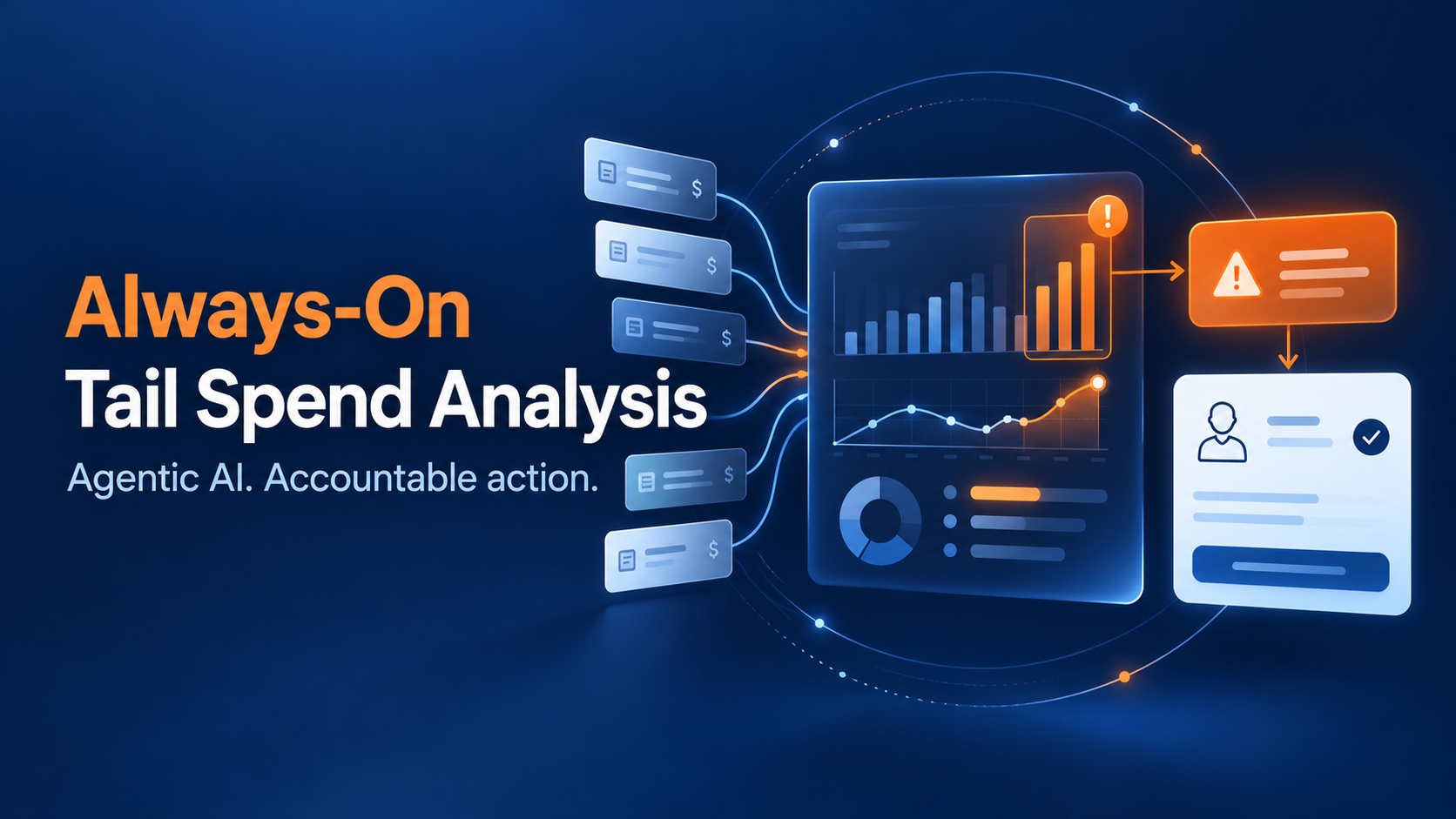
Imagine an AI agent continuously watching for those changes, gathering the relevant evidence, and initiating a workflow for the people who can respond. Procurement does not have to remember to run a report. Finance does not have to discover the exposure after it has accumulated. The organization gains an earlier opportunity to act.
That is the opportunity of always-on tail spend analysis: ongoing detection connected to an accountable response.
Tail spend is the fragmented portion of purchasing that receives less active management than strategic spend. It often includes small orders, occasional suppliers, subscriptions, and one-off services spread across departments.
Individually, these purchases can be difficult to prioritize. Collectively, they can reveal recurring demand, supplier concentration, missed contract opportunities, and emerging control gaps.
A periodic report shows what happened during the reporting window. An always-on process checks new activity as data becomes available and evaluates how purchasing patterns are changing. Its cadence might be daily, hourly, or triggered by new records, depending on the connected systems and the business need.
The important shift is that analysis becomes a recurring operational process. Someone no longer needs to ask the question before the organization starts looking for an answer.
Spending controls reflect assumptions about how the business operates. A transaction threshold assumes the individual purchase is an appropriate unit of review. An approved supplier list reflects what was known when the supplier was assessed.
Those assumptions can become outdated. Demand grows. Teams adopt new tools. Locations start buying from the same supplier independently. A policy reviewed once a year may struggle to keep pace.
Agentic AI can be configured to look for changes that deserve investigation, including:
The agent can compare activity with an agreed baseline, retrieve relevant records, explain a finding, and initiate a permitted review workflow. Its instructions, data access, and allowed actions should reflect the organization's priorities.
“Tuning” can include changing review windows, category definitions, risk criteria, and notification thresholds. It does not have to mean retraining a model every time the business changes.
This scenario uses fictional amounts and policies.
A manufacturer allows routine purchases below $5,000 without central procurement review, subject to its other purchasing requirements. Several plants start ordering maintenance supplies from the same vendor.
Each order is $4,800. The individual transactions pass the current check.
An always-on analysis detects eight related purchases across four plants in two weeks: $38,400 in total. Purchase frequency has increased compared with the preceding period.
The configured agent gathers the transactions, checks available supplier and contract records, and prepares a finding:
“Purchasing from this supplier has increased across four plants. Eight related orders total $38,400 in two weeks, and each falls below the individual review threshold. Assess whether this represents recurring demand that should be managed through a sourcing review.”
A Jupiter workflow could route the finding to the category manager and relevant plant buyers, with an assigned owner, due date, and links to the evidence.
The buyers explain that the orders support a shared maintenance program. Procurement now has an opportunity to coordinate demand, evaluate terms, and agree on a suitable buying approach before another cycle of orders accumulates.
If the same pattern continued to 24 orders, the total would reach $115,200. Early detection creates a chance to intervene while the commitment is smaller. It does not establish wrongdoing or guarantee savings; the stakeholders still need to evaluate the business need.
Process Tempo Jupiter supports applications that combine analytics, forms, and embedded workflow with agentic AI. Explore the platform. A tail spend implementation can use those capabilities to make ongoing analysis part of the way procurement operates.
Configure the monitoring process to evaluate new purchasing data, suppress duplicate findings, and initiate the appropriate workflow when a defined condition is met. Then give each stakeholder a clear next step:
The human in the loop has a meaningful role: judging business context, approving consequential actions, and deciding whether the proposed response is proportionate. The agent handles the configured monitoring and preparation between those decisions.
Suppose a manager sees the supplier pattern and emails IT: “Lower the limit to $2,500 and block this vendor.” One purchasing system changes. Another does not. A plant creates a spreadsheet workaround to keep maintenance moving.
The organization has acted, but important questions remain unanswered. Was the supplier the problem, or was the recurring demand poorly coordinated? Who approved the change? Which purchases should it affect? What happens to urgent maintenance orders?
A structured Jupiter workflow can make the proposal, scope, authority, and implementation visible. It can also support urgent temporary measures with an expiry date and a required follow-up review.
For a lasting policy change, stakeholders can test a proposed rule against historical purchases, assess the additional workload, agree on exceptions, and verify that the approved version reaches each intended system.
Transparency helps employees understand why a purchase needs review and helps managers see whether the response has actually been completed.
Always-on analysis should bring relevant changes to people's attention without overwhelming them. Start with a defined category or business unit and tune the process using reviewed outcomes.
Group related transactions into a single investigation. Update an existing case when exposure grows. Escalate when its significance changes or its owner misses a deadline. Require evidence for material claims and keep ambiguous supplier matches visible for review.
Also show when data was last refreshed and whether an analysis run failed. Continuous monitoring depends on reliable inputs and execution. A quiet dashboard should not conceal a disconnected data source.
Measure time to detection, time to stakeholder response, confirmed findings, false positives, and completed actions. Validate realized savings separately from estimated opportunities, and watch for delays introduced into legitimate purchasing.
The promise of agentic AI in tail spend is ongoing attention to changes that people may otherwise discover too late.
A growing supplier relationship can prompt a sourcing review. A recurring exception can prompt a process improvement. A small software purchase can prompt a data-access assessment.
With Jupiter coordinating detection, stakeholder involvement, and follow-through, organizations can build a continuous cycle of observation, judgment, action, and learning.
Your purchasing patterns keep changing. Your ability to recognize and respond can keep pace.
Explore Process Tempo Jupiter to discuss an always-on tail spend workflow for your organization.



Build enterprise-ready applications without writing code.
