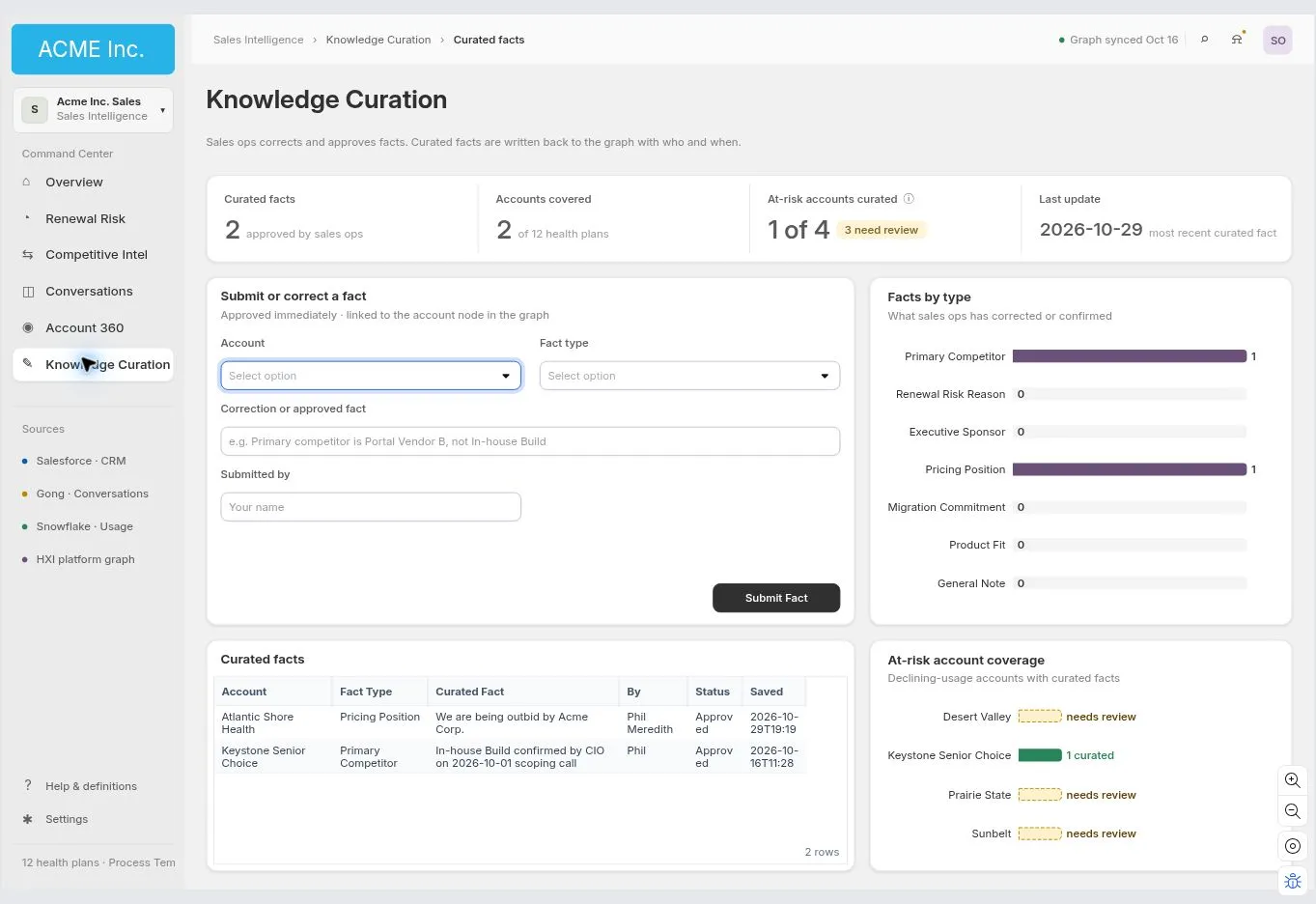
Process Tempo Jupiter is the governed layer between AI agents and your enterprise. Agents act only through Jupiter workflows, so every action is permissioned, approved where it needs to be, logged, and open to human review.
The challenge
Agentic AI goes beyond recommending. Agents update records, trigger processes and commit the business to decisions. Connect them straight to your ERP, CRM or ITSM and the controls you rely on for people fall away.
Agents run on broad service credentials instead of role-based access.
There's no approval step before an agent changes a record or commits spend.
Nobody can say with confidence what an agent did, with which data, or why.
Each team wires up its own agents, so policies differ across the business.
How it works
Agents never touch your systems directly. They act through Jupiter, the governed workflow layer that applies role-based access control, approval steps and a full audit trail to every action.
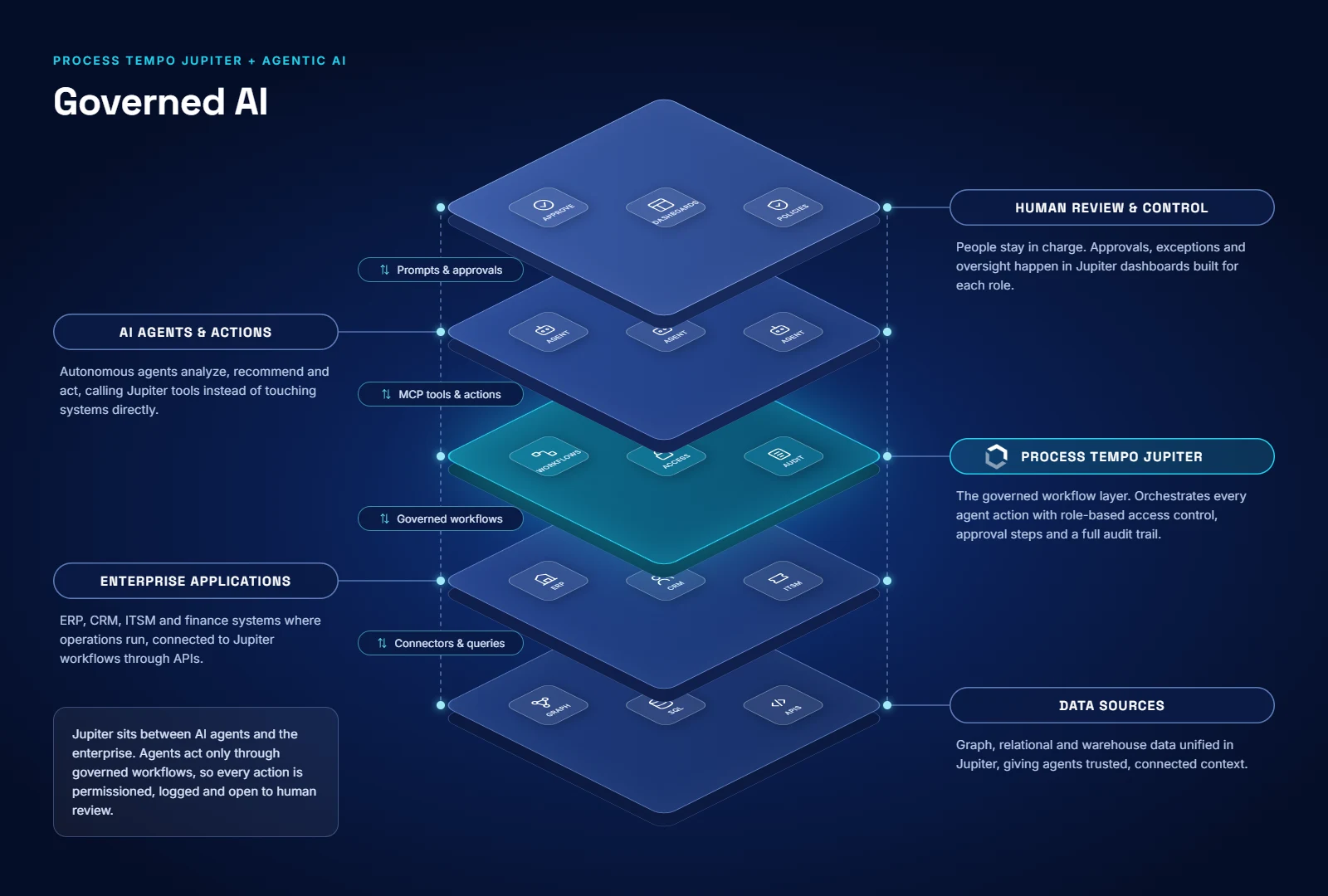
The agent calls a Jupiter workflow via API such as updating a record, opening a case or triggering a workflow.
Jupiter confirms the agent is permitted to use that tool, on that data, for that role, before anything happens.
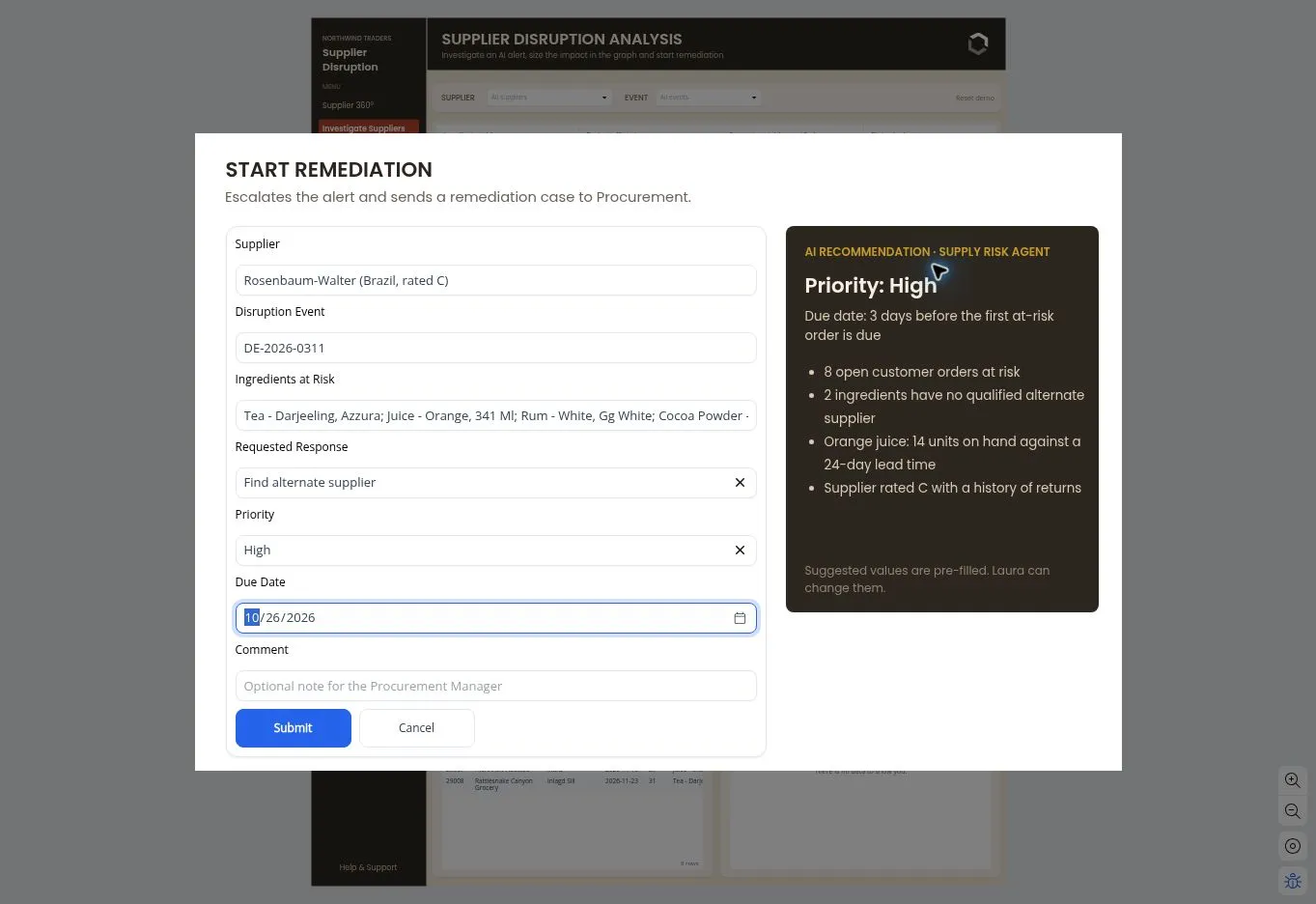
Actions that need sign-off are routed to the right person in a Jupiter dashboard, with the agent's evidence attached.
Approved actions run through governed workflows into your enterprise systems, and every step is logged for audit.
What Jupiter provides
Agents call Jupiter tools over MCP instead of touching systems directly. You decide which tools each agent can use.
Agents work within the same role-based access control and identity integration that governs your people.
Require human sign-off before high-impact actions run, based on the action, the data or the level of risk.
Approvals, exceptions and oversight happen in Jupiter dashboards built for each role.
Every agent request, tool call, approval and outcome is recorded: who, what, when and why.
Agents draw on graph, relational and warehouse data unified in Jupiter, so they act on governed data.
Control
Set the line between autonomy and oversight for each workflow. Routine, low-risk actions run automatically. Anything with business impact waits for a person.


Transparency
Every agent action carries its evidence, its approvals and its result, so reviewers, auditors and process owners can check the reasoning.

FREE EBOOK
What it takes to build enterprise-grade applications in the era of AI
Enterprises have invested heavily in data, analytics and AI, but critical processes are still disconnected. This guide covers how to build operational applications on what you already have, with governance, security and auditability built in from the start.
Why dashboards and AI recommendations stall before they turn into action
How a shared foundation cuts application sprawl and maintenance
What governance by design looks like in practice
Model the governed processes agents work inside, with approvals, assignments and exception handling.
Learn moreSee agents and people share the work in a governed supplier onboarding workflow.
Learn moreThe role-based permissions, identity integration and auditability that agents inherit in Jupiter.
Learn moreSee how Jupiter governs agent actions with permissions, approvals and a full audit trail.