In practice · Supplier onboarding
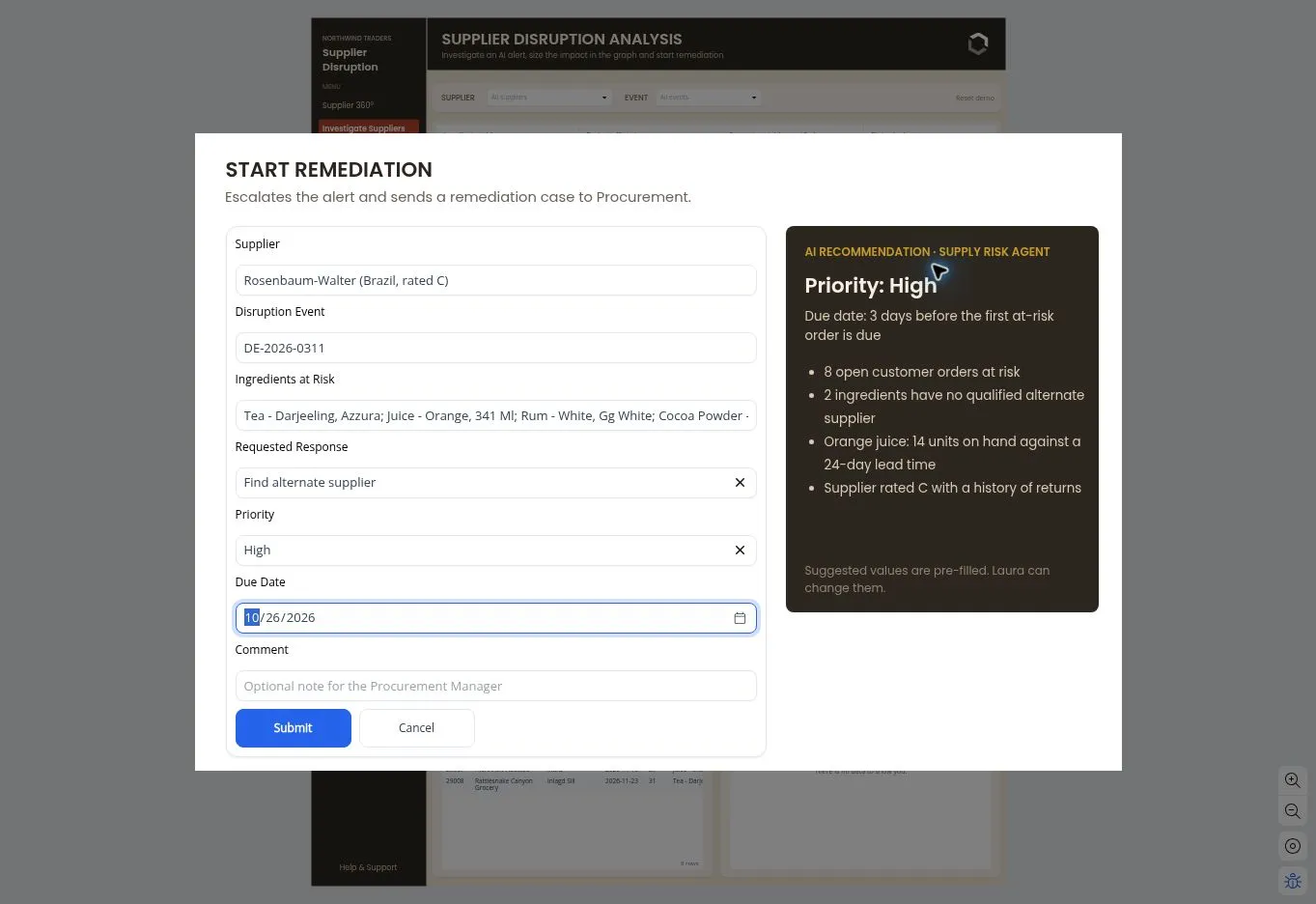
An AI agent at every human step
Onboarding a new supplier involves intake, due diligence, risk review, and approval — each one a point where a person has to decide. With Jupiter, an AI agent works alongside every one of those steps: it gathers the background, recommends the next move, and keeps the work flowing, while people make the calls.
Gathers the context
Before a reviewer opens the case, the agent has pulled the relevant records, history, and documents from connected systems and summarized what matters.
Recommends the next step
The agent proposes a decision — approve, request more information, or escalate — and shows the evidence behind it. The reviewer approves, edits, or overrides.
Keeps work moving
The agent balances workloads across reviewers and completes small, low-risk tasks on its own, so cases don’t sit in queues waiting for routine work.
The workflow, step by step
How the agent and people share the work
At each step, the agent prepares and the person decides. Here’s who does what.
Agent: classifies the request, checks it’s complete, and drafts a follow-up for any missing documents.
Person: the requester confirms and sends.
Agent: gathers existing vendor records, contracts, past performance, and risk and compliance checks, then summarizes the findings.
Person: reviews the summary instead of assembling it.
Agent: recommends a risk tier and next step, with supporting evidence. For low-risk suppliers, it completes the standard checks itself.
Person: the risk reviewer approves, adjusts, or overrides.
Agent: routes each review to an available reviewer with the right expertise and rebalances when a queue builds up.
Person: managers see who has what and step in when needed.
Agent: drafts the approval summary and, once approved, completes the routine setup tasks.
Person: the approver signs off. Every agent action and human decision is recorded.
Platform capabilities used
Agentic AI
The governed layer that permissions, approves and records every action an agent takes.
Learn moreWorkflow and Approvals
Model governed processes with human review, approvals, assignments, and exception handling.
Learn moreData Connectivity
Give agents the context they need from the enterprise systems and data you already run.
Learn more